St Philomena College was founded by Msgr Antony Patrao who felt that a College in this part of the state would save the people of the inconvenience of moving to distant places for higher education. He set out to realize his dream and the mission was accomplished in the year 1958.
Since its inception, the Institute has lived up to societal expectations, turning out consistent and appreciable results in academic and non-academic fields. The institution does attempt to treat the primary stakeholders in 5 UG programs and 5 PG programs with a rewarding educational experience.
ISO 9001: 2015 Certified | Re-Accredited by NAAC at ‘A’ Grade | Managed by the CBE
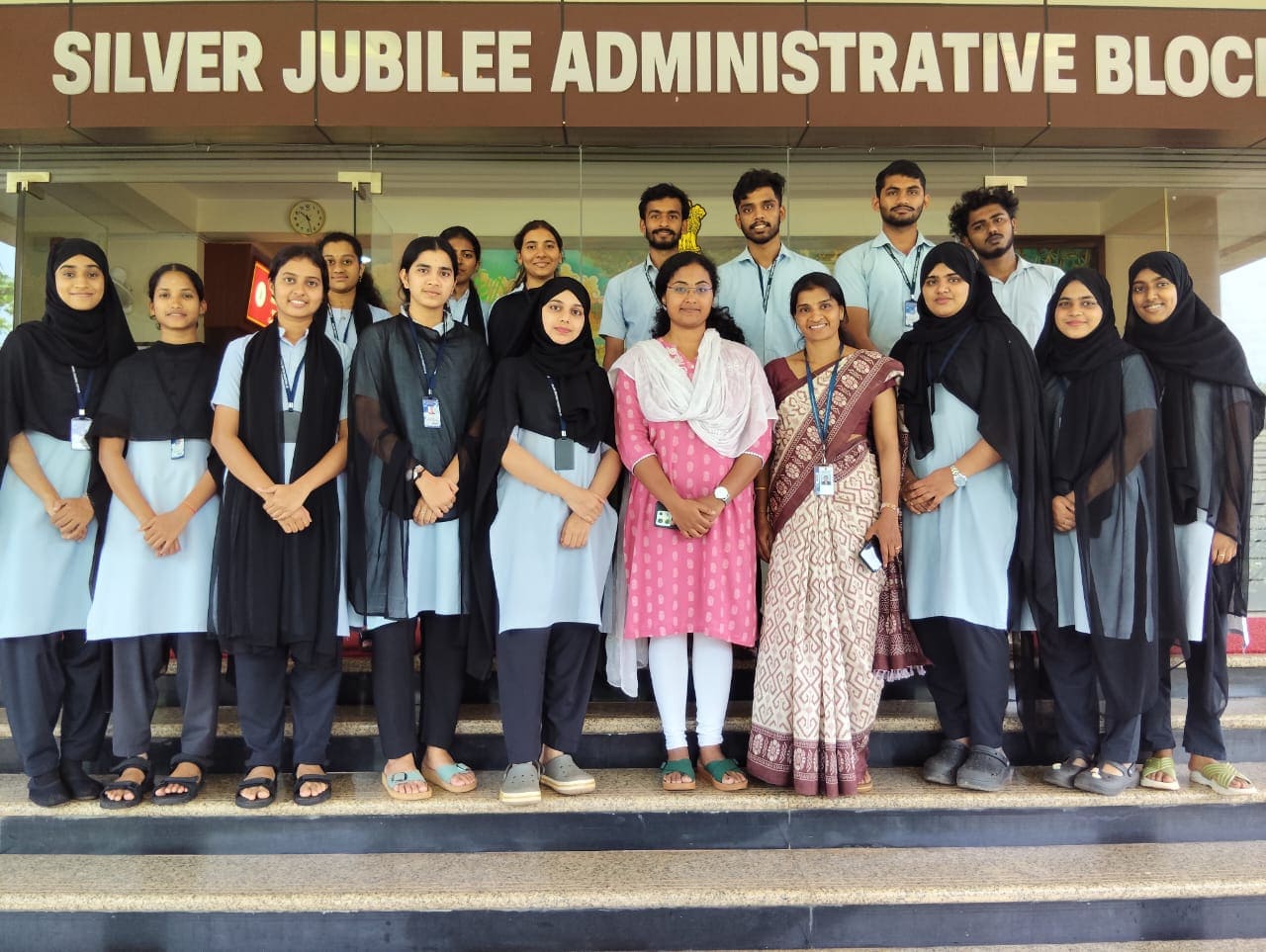
In a meaningful academic exercise, 111 students from the Department of Botany, St. Philomena College Autonomous, Puttur, undertook an educational visit to the prestigious National Research Centre for Cashew (NRCC), Puttur. The visit was organized as part of their curriculum under the guidance of Mrs. Shashi Prabha, Head of the Department of Botany, and Mrs Smitha Vivek, Assistant Professor of Botany.
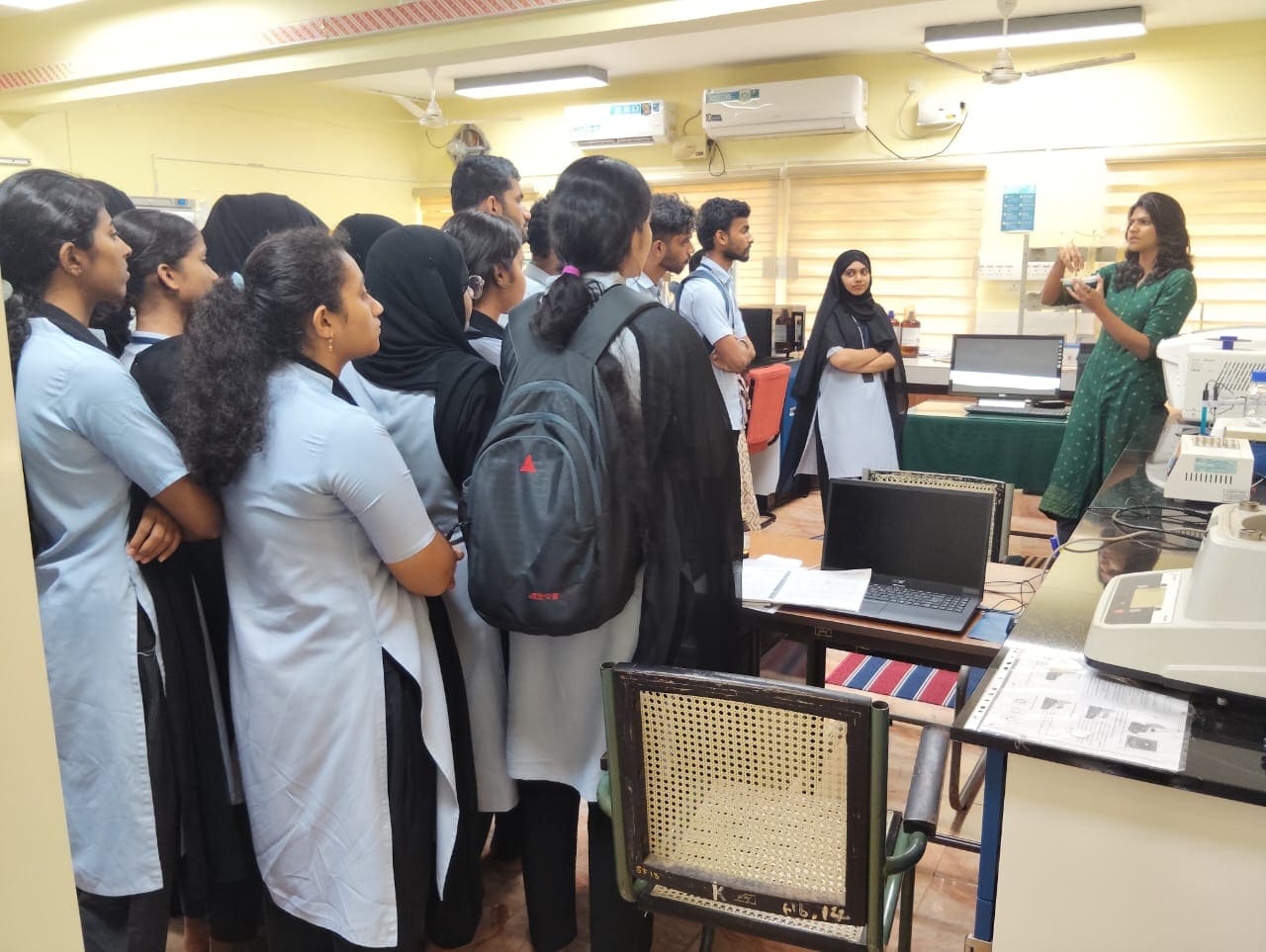
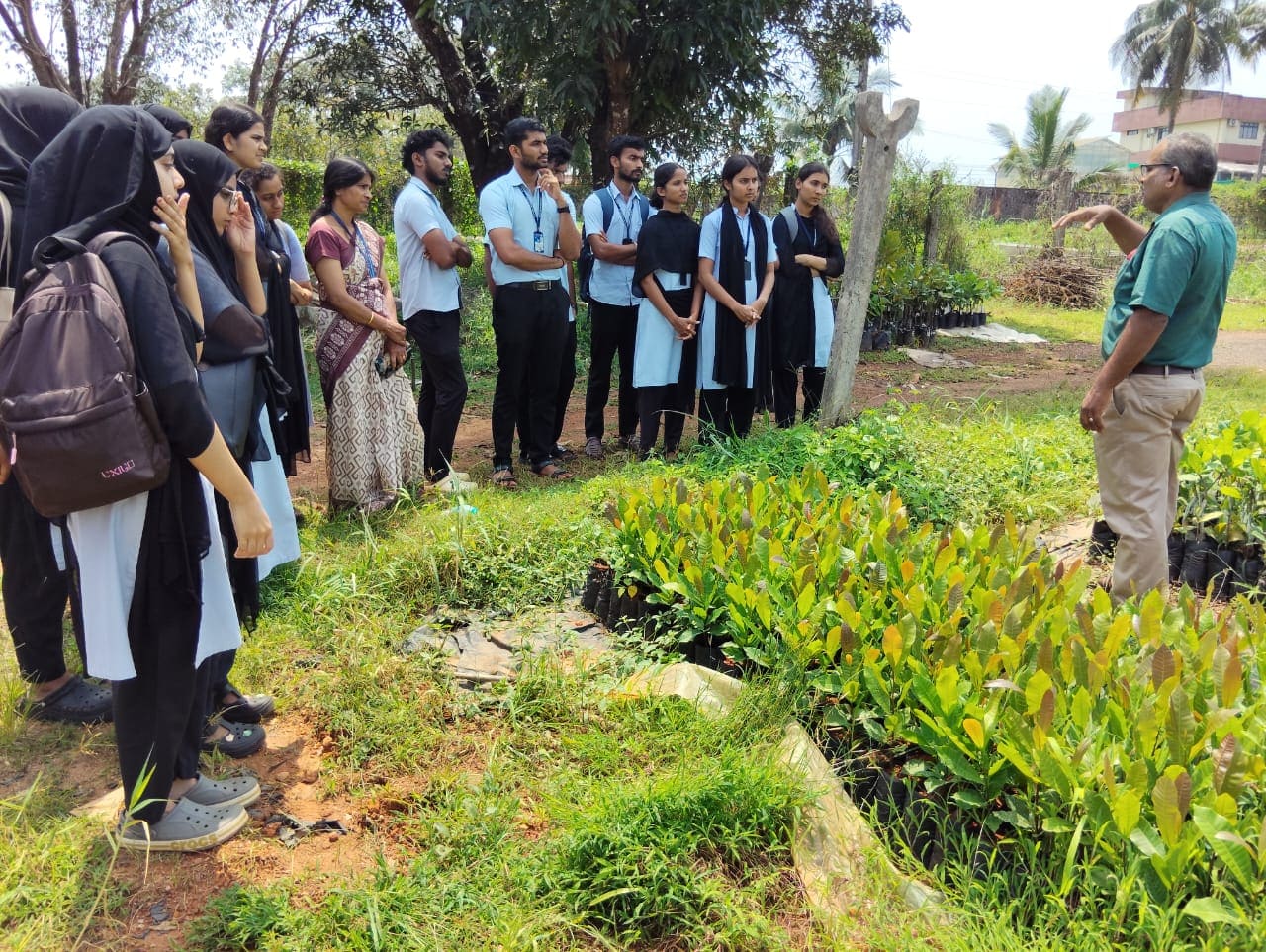
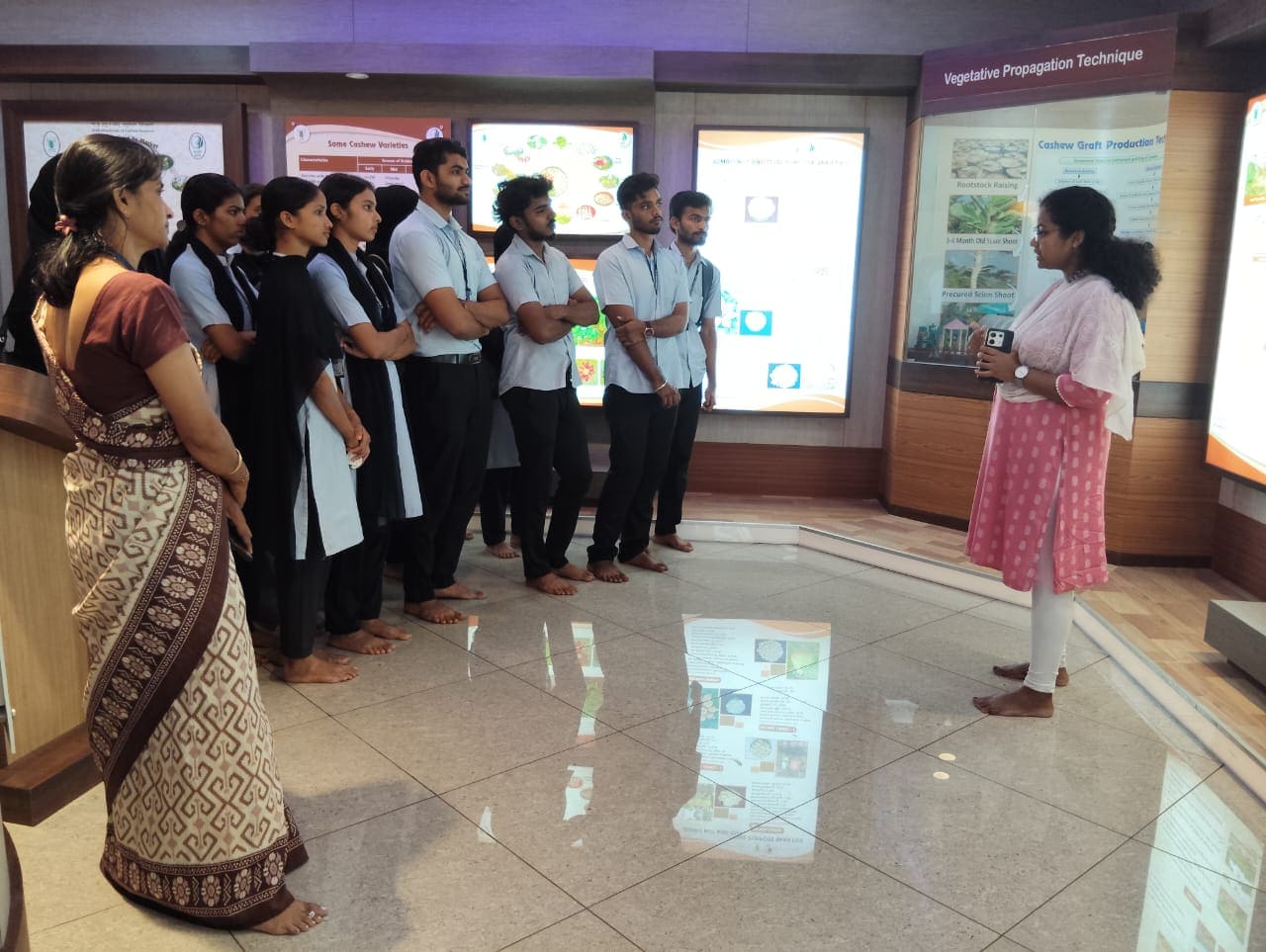
Fifteen students, accompanied by Mrs Smitha Vivek, engaged in an in-depth learning session at the research institute. They were introduced to various facets of cashew cultivation and research, including the identification of cashew varieties, hybridization processes, grafting techniques, and the application of biotechnology in cashew improvement programs.
The interactive session with NRCC scientists Dr Mohan T.C., Dr. Aswathi Sooraj, and Dr Manju proved enlightening. The scientists generously shared their expertise on ongoing research initiatives and innovations in cashew production. Dr Mohan also led the students through a detailed field tour, showcasing diverse cashew varieties, including prominent Brazilian cultivars, and demonstrating cross-hybridization techniques aimed at enhancing crop yield and quality.
In addition to their laboratory and field explorations, the students observed beekeeping and flower cultivation practices, learning firsthand about the vital role of bees in cross-pollination and ecological balance. The visit served as an enriching experience, broadening students’ practical understanding of plant science and fostering enthusiasm for future research pursuits.
The Department expressed deep gratitude to Dr Dinakar Adiga, Managing Director of NRCC Puttur, for kindly granting permission for the educational visit and extending support to this valuable learning initiative.